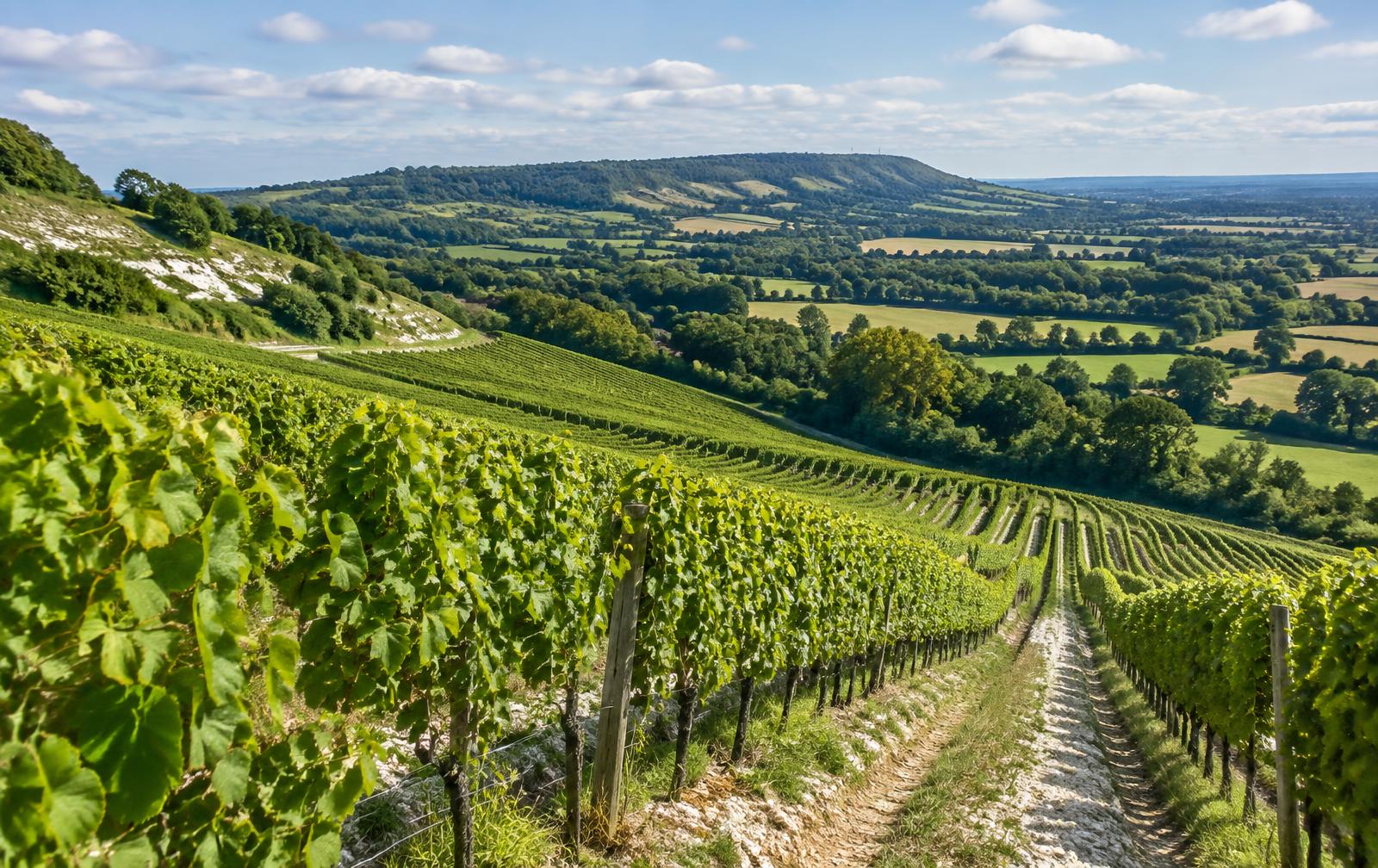
Stand at the high scarp edge of Ranmore Common and cast an eye down into the valley floor. The white scars exposed along road cuttings and sunken bridleways tell an eighty-million-year-old story: the same band of Upper Cretaceous chalk that forms the White Cliffs of Dover and plunges beneath the English Channel to re-emerge in the Côte des Blancs of Champagne.
Surrey viticulture is no longer an eccentric hobby; it is a serious geological venture. Along the southern-facing slopes of the North Downs, where the River Mole carves a gap through the chalk ridge between Dorking and Leatherhead, a specific microclimate has established this corridor as England’s premier cool-climate wine country.
The Science of the Chalk Scarp
- Soil Composition
- Upper Cretaceous Chalk over Lower Greensand
- Key Varietals
- Chardonnay, Pinot Noir, Pinot Meunier
- Microclimate Feature
- 30-degree south-facing slopes providing natural cold-air drainage
- Featured Vineyard
- Denbies Wine Estate
What makes this narrow geological strip produce sparkling wine that routinely bests Épernay and Reims in blind international tastings?
Soil Chemistry: The pure calcium carbonate of the North Downs chalk acts like a mineral sponge. It drains excess rain away from delicate grape root systems during wet English Augusts, while retaining vital moisture deep underground during parched harvest months.
Cold-Air Drainage: The best vineyards are planted on steep inclines. Frost, which settles in valley bottoms on crisp May mornings, rolls harmlessly down the slopes, protecting delicate bud break.
Extended Hang-Time: Surrey’s northern latitude gives vines up to two more hours of daily daylight during the midsummer ripening window than their counterparts in northern France. The fruit ripens slowly, building complex sugar profiles while preserving the piercing, crystalline acidity essential for bottle-fermented traditional method (Méthode Champenoise) sparkling wine.
The Surrey Varietal Profile
Chardonnay on Chalk: Produces wines marked by green apple, lemon verbena, and a taut, flinty salinity derived from the marine fossils embedded in the chalk strata.
Pinot Noir on Greensand Outcrops: Where topsoils carry warmer ferruginous sand, Pinot Noir gains structural weight, expressing notes of wild hedgerow raspberry, briar rose, and earthy woodland floor.
Pinot Meunier: Frequently used to soften blends, providing mid-palate roundness and orchard-peach stone-fruit complexity.
The Quiet Cellar Door Itinerary
Unlike high-volume commercial wine regions with bus parking and souvenir counters, the Surrey wine route remains quietly understated.
A day along the chalk corridor is best experienced at an unhurried pace: tasting single-estate Blanc de Blancs at Denbies Wine Estate, stopping by Village Greens Farm Shop inside the estate grounds for raw-milk Surrey cheeses and artisan sourdough, and concluding the afternoon beside the open flagstone hearth of The Running Horses in Mickleham. It is English viticulture at its purest: shaped by ancient stone, cool hill air, and patience.